August 2024 – October 2024
🔍 Background
I joined a product team working on operational technology (OT) in mid-2023. Operational technology (OT) heavily involves work and tasks in the industrial environment, requiring the product team to empathize with a new set of personas who work on the shop floor, not traditional IT environment. In 2024, the OT team made an acquisition, which brought new product lines and new personas to the portfolio.
Post-acquisition, I learned a key need from the product teams is to get alignment on personas and use cases. I led the effort to consolidate the personas and use cases and came up with a persona rubric that’s now integral to new members’ onboarding, sales team training, and online product demos.
This persona rubric is a great example of cross-team collaboration where more than 10 team members from eng, design, content, and product management have contributed to shaping the final version.

🗻 Process
The persona creation and alignment process included 3 rounds:
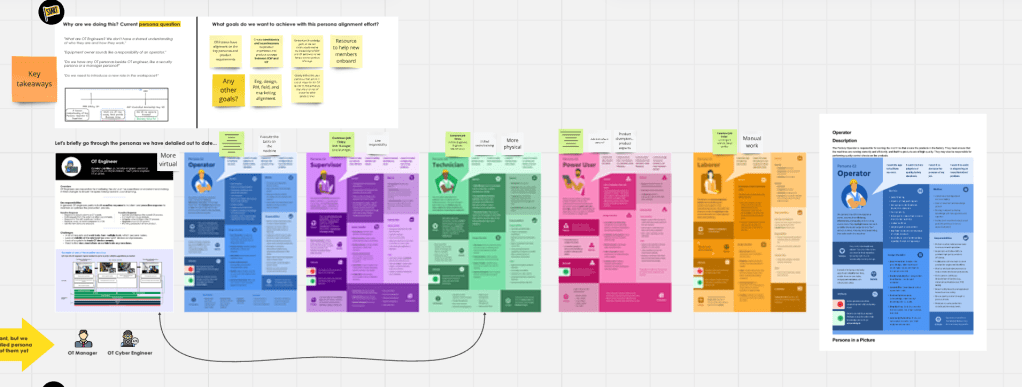
- Round 1 – Getting an overlay of current personas and key info needed for new personas: We ran the first workshop to map out all the current personas based on previous research. I also got the team to agree on the information that is most needed to help inform their decisions, making sure it will be useful to our cross-functional teams.
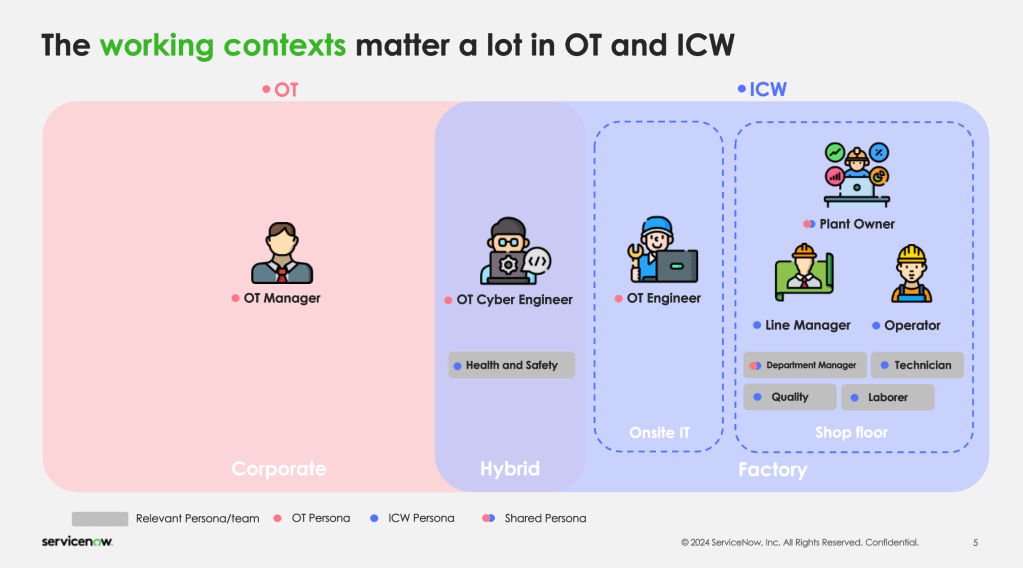
- Round 2 – Prioritizing core personas and situating them in the core use cases: The second workshop directed the team to figure out the core personas vs secondary personas. And we mapped how different personas work together in the core workflows and use cases.
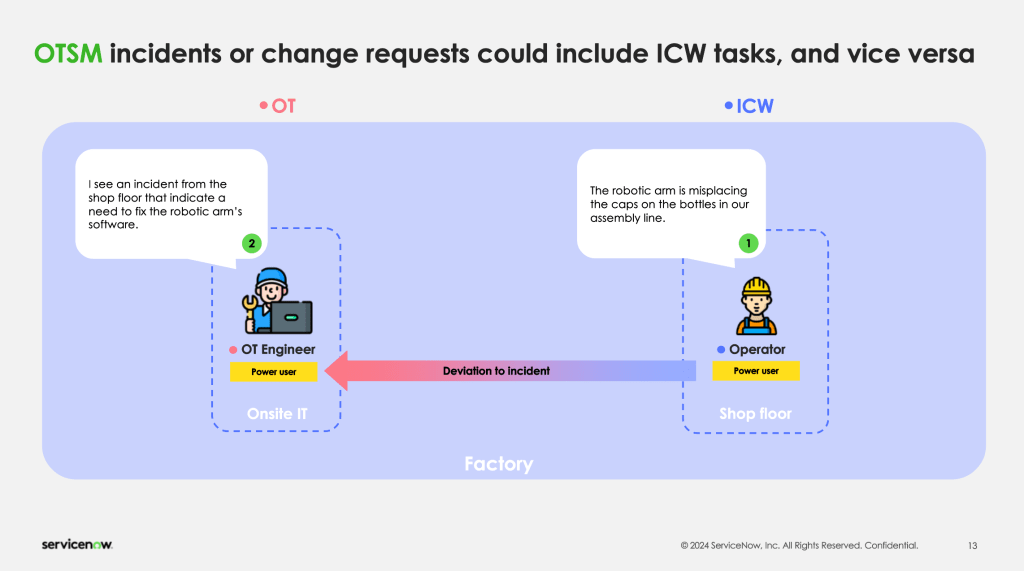
- Round 3 – Getting expert feedback and socializing the personas: I brought the draft personas and rubric to review by the lead product managers, engineers the with most tenure in both product teams, lead designers, outbound team, and marketing to get their feedback and input to refine the information personas. This also helps socialize the persona rubric with different teams to make sure this will help with their work. Before the rubric go live, I got our technical writer to proofread all the information.

Lastly, I scheduled a final readout of the persona and introduced the personal rubric to the cross-functional teams. During the final readout, I invited cross-functional team members to role-play different personas when presenting.
🔭 Impact
- This persona rubric is now integral to new team members’ onboarding, sales team training, design workshops, customer-facing demos, and our marketing materials.
- The personas are also widely shared with adjacent teams to drive cross-business unit collaboration.
✍️ Lessons Learned
- Involving cross-functional teams in the persona-creation process helps promote the adoption of personas. I found getting my stakeholders involved in the persona mapping workshops, follow-up feedback rounds, and inviting them to co-present the final personas to really help get the information across and become sticky.
- Situating personas in workflows brings personas to live. The traditional personas only give teams an understanding of how a user works. Connecting personas’ tasks into workflows help your team understand how personas work in different use cases and opportunities to improve collaboration between different personas.
- Continuously improve the personas. Persona info can get outdated easily, especially in the age of AI, where certain tasks might get replaced or redefined. Our team plans to revisit persona info every now and then to make sure it reflects the latest info we are gathering from the field.
 DAVID LIN